• Skip to primary navigation
  • Skip to main content
  • Skip to primary sidebar
  • Skip to footer

Mount Prospect Historical Society

#wrap

  • About Us
    • Our Museum
    • History
    • Virtual House Tour
    • Hometown History Video Series
    • Vanished Mount Prospect
    • Guided Tours of Dietrich Friedrichs Historic House Museum
    • Presentations
    • Dollhouse Tours
  • Shop
  • Volunteer
  • Donations/Membership
    • Donate
    • Donate an Artifact
    • Giving Tuesday
    • Membership
  • Events
    • Holiday Housewalk 2025
    • Saturday Afternoon Teas
    • Bessie’s Workbasket
    • Evening Creations
    • MPHS Book Club
    • Youth Programs
    • Cemetery Walk at St. Paul Lutheran Cemetery
  • Newsletters
  • Central School
    • For Educators
    • Donors
  • Research Resources
    • Pandemic Moments 2020-21
      • COVID-19 Survey 2021
      • Contributing to Pandemic Moments
      • Personal Accounts
      • Youthful Insights
      • Contact Release Form web format
      • Contact Release Form in PDF format
      • Pandemic Reflections
    • Mount Prospect Businesses
    • Churches of Mount Prospect
    • Essays on Mount Prospect’s History
    • Houses of Mount Prospect
    • Lost and Found Mount Prospect
    • Mount Prospect People
    • Schools of Mount Prospect
    • Mount Prospect Stories
    • Structural Memorials
    • Other Sources for Research
    • Centennial 2017
    • Neighborhood Walking Tours
  • Subscribe!

Structural Memorials

September 12, 2012

Prospect Theater

Name of Building or Business: Prospect Theater

Address: Main Street

Built: 1950

What is currently at that address: Condos
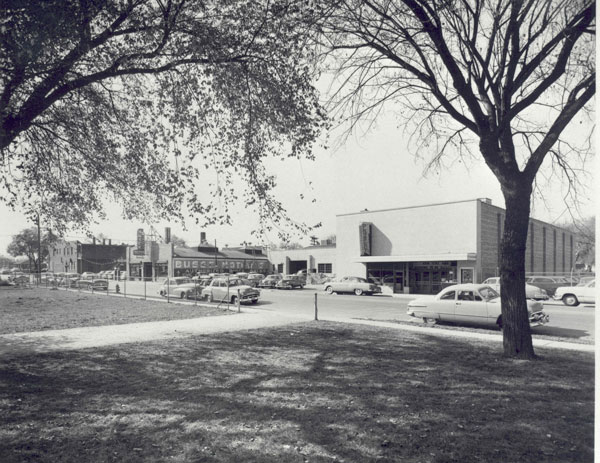
The Prospect Theater was once a center in the community. It was a classic one screen theater with a location to which hundreds of families could walk. It opened in 1950 and was big deal in a small town like Mount Prospect. This was the first real theater to open in the community and it was a sign of the community’s development. It opened the day after Christmas with Tea For Two, starring Doris Day and Gordon MacRae and Copper Canyon starring Ray Milland and Hedy Lemarr. When the Prospect Theater opened, it was the heyday of downtown theaters. Before the development of huge multiplex theaters on the outskirts of towns, the downtown theater was a mainstay of local entertainment and social life. However, with increased developments along the periphery of towns, the one screen theaters had a hard time competing with much larger theaters that were located outside of town, but had more parking. Over the years, the Prospect Theater was surpassed by these larger theaters and was not maintained. The distinctive marquee and awning were taken down when Route 83 was widened and by the time it was demolished the theater did not look like a center for local community life.
Filed Under: Structural Memorials

September 12, 2012

Mount Prospect Country Club House

Name of Building or Business: Northwest Hill Country Club House

Address: 600 S. SeeGwun

Built: 1929

Demolished: 2003

What is currently at that address: Mount Prospect Golf Club House

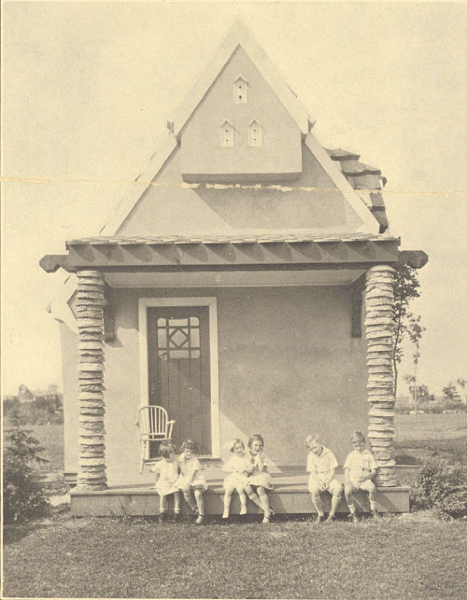
playhouse-at-mp-golf-course-035
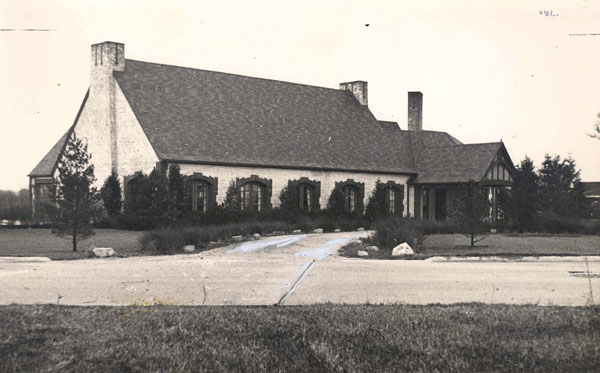
The Country Club was built by Axel Lonnquist, the developer who originally laid out the golf course and the neighborhoods surrounding it. He was one of the largest developers in Mount Prospect’s first real estate boom in the 1920s. The golf course was constructed first, then a children’s playhouse and finally the clubhouse. Originally, the country club was built as an incentive for real estate speculation. It was operated as a private club and membership was restricted to those who bought property in Lonnquist’s development. The original 1929 building was the showpiece of this early suburban housing development. Lonnquist helped to redefine the village of Mount Prospect and, in a small way, suburbs nationally. In the 1920s, when Lonnquist came to Mount Prospect, cities were beginning to be seen as threatening, rather than places of opportunity. Lonnquist played off of this and the history of the glorification of nature, the role of domesticity, and the idea of the home. This, tied to the investment in transportation and the technological advances in housing construction, made it the right time and the right place for a person like Axel Lonnquist.

mount-prospect-country-club-194
His development in Mount Prospect was different from earlier subdivisions in town. He purchased the farms of Fred Schaefer and Henry Mensching in 1925 and planned “a luxury community.” He planned to utilize both the natural beauty of the area and the modern ideas of suburbs for this community. In his advertisements, he heralded the semi-rural landscape with the proximity to the scenic Weller Creek, safe from the hectic pace of the city. He also advertised the numerous trains in and out of the city for working professionals. This was meant to be a push and a pull with the ideas of escaping to the bliss of the quiet country home while needing top get your family away from the pace and corruption of the city. He specified that the lots in the development were to be large enough to support both a comfortable home and good-sized yard. The crowning glory of this development however, was to be the Northwest Hills Country Club. His idea was that membership in this would be associated with owing a lot in his development. He opened the Country Club in 1926, although it was then only a nine-hole course. He later expanded it to an 18 hole course and, in 1929, opened the clubhouse.

Although Axel Lonnquist was able to redefine Mount Prospect, he was not able to make a lot of money on the endeavor. Due to the timing of his investment, he was not able to sell most of his land before the crash of 1929 and the depression that followed. He sold his property in Mount Prospect at huge discounts in 1931 to cover debt. In the time that he owned the land, he had been able to plat the streets, build the country club and a few demonstration homes, but he built very few homes that are standing today. The Country Club was then sold to a man named Harold Wilson who changed the name of the club to the more familiar Mount Prospect Country Club. He made it a semi-private club with annual dues and held onto it until 1950, when he sold it to Henry Sophie. Sophie ran the club until 1958, when he sold the course to Richard Hauff, who was a suspected member of the mafia. Hauff was very controversial, but redesigned the course, hosted the Women’s Master’s PGA tournament in 1959 and then declared bankruptcy in 1960 and put the course up for sale. After an involved fight to pass a referendum, the Mount Prospect Park District finally purchased it in 1961. Over the years, a number of additions were put onto the clubhouse leaving hard to recognize any historic value in the building. The structure was eventually demolished in 2003 although when it came down, a time capsule was found in the corner stone. This held a little glimpse of the glamour and luxury that this building had once represented.

Filed Under: Structural Memorials

September 12, 2012

Moeling House

Name of Building or Business:  Moehling Home

Address: 8 E. Northwest Highway

Built: Circa 1890

Demolished: 1966

What is currently at that address: Condos

8-e-northwest-highway-moehling-house-051
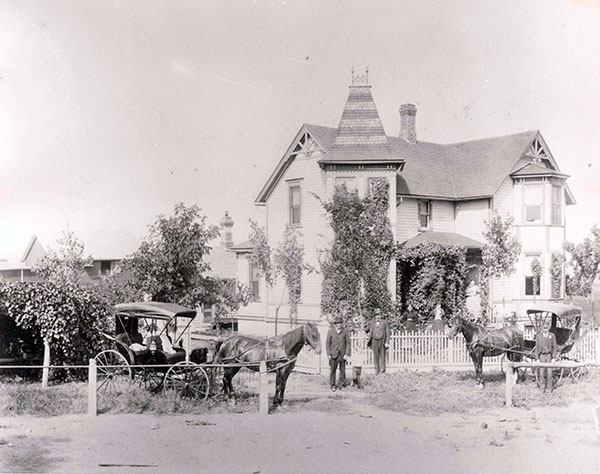
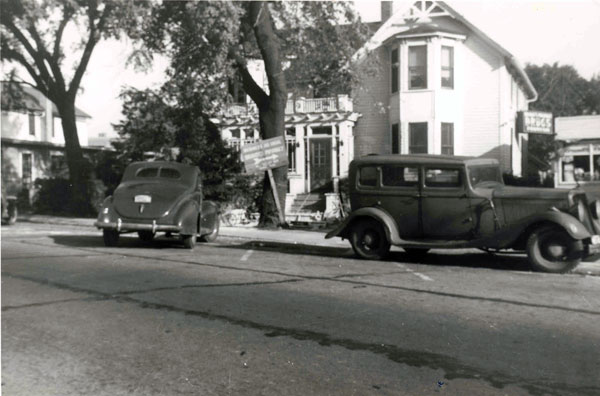
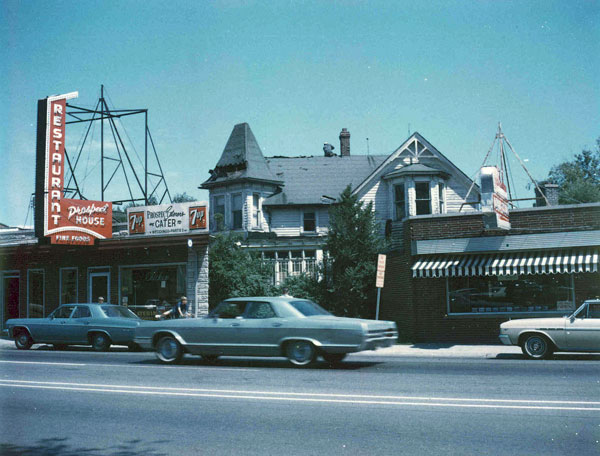
John C. Moehling moved to Mount Prospect in 1882 and built a beautiful Victorian house across the street from the Railroad station a few years later. Moehling was on of Mount Prospect’s biggest promoters; he ran the first store in Mount Prospect and was responsible for the opening of the first post office. He was also responsible for bringing John Meyn, the first blacksmith, to town and working to transform Mount Prospect from a wide spot in the road into a small town. John C. Moehling’s house represented his importance to the community. The house stood at 8 E. Northwest Highway and was built around 1890. Over the years, the house did not fair well. Northwest Highway was expanded and this made the house very close to the street and John Moehling’s success at bringing business to the community left his house in the middle of a commercial area. With these changes, the house deteriorated. Due to a number of short sighted decisions, storefronts were built in front of the building for such things such as the Prospect House Restaurant and Francek Reality, which was operated by John C. Moehling’s descendants. The house declined and what was once the finest house in town, home to the community’s biggest promoter and an actual Victorian house, became seen as an eyesore and was demolished in 1966.

8-e-northwest-highway-moehling-house-051 8-e-northwest-highway-moehling-house-c1942-052 8-e-nw-highway-moehling-house-demolition-1966-053
[Show picture list]

Filed Under: Structural Memorials

  • « Go to Previous Page
  • Page 1
  • Page 2
  • Page 3
  • Page 4
  • Page 5
  • Go to Next Page »

Primary Sidebar

On-Line Resources

  • Mount Prospect Businesses
  • Churches of Mount Prospect
  • Essays on Mount Prospect’s History
  • Houses of Mount Prospect
  • Lost and Found Mount Prospect
  • Mount Prospect Stories
  • Mount Prospect People
  • Schools of Mount Prospect
  • Structural Memorials
  • Other Sources for Research

Footer

Please follow & like us :)

Facebook

Mount Prospect Historical Society
101 South Maple Street
Mount Prospect, IL 60056
847.392.9006
info@mtphistory.org

The Mount Prospect Historical Society is a 501(c)(3) nonprofit organization that is committed to preserving the history of Mount Prospect, IL, through artifacts, photographs and both oral and written memories of current and former residents and businesspeople.  On its campus in the heart of the Village, the Society maintains the 1906 Dietrich Friedrichs house museum, the ADA-accessible Dolores Haugh Education Center and the 1896 one-room Central School, which was moved to the museum campus in 2008, renovated and opened to the public in 2017, the 100-year anniversary of the Village.

Archives

Copyright © 2026. ALL RIGHTS RESERVED · Mount Prospect Historical Society Log in