• Skip to primary navigation
  • Skip to main content
  • Skip to primary sidebar
  • Skip to footer

Mount Prospect Historical Society

#wrap

  • About Us
    • Our Museum
    • History
    • Virtual House Tour
    • Hometown History Video Series
    • Vanished Mount Prospect
    • Guided Tours of Dietrich Friedrichs Historic House Museum
    • Presentations
    • Dollhouse Tours
  • Shop
  • Volunteer
  • Donations/Membership
    • Donate
    • Donate an Artifact
    • Giving Tuesday
    • Membership
  • Events
    • Holiday Housewalk 2025
    • Saturday Afternoon Teas
    • Bessie’s Workbasket
    • Evening Creations
    • MPHS Book Club
    • Youth Programs
    • Cemetery Walk at St. Paul Lutheran Cemetery
  • Newsletters
  • Central School
    • For Educators
    • Donors
  • Research Resources
    • Pandemic Moments 2020-21
      • COVID-19 Survey 2021
      • Contributing to Pandemic Moments
      • Personal Accounts
      • Youthful Insights
      • Contact Release Form web format
      • Contact Release Form in PDF format
      • Pandemic Reflections
    • Mount Prospect Businesses
    • Churches of Mount Prospect
    • Essays on Mount Prospect’s History
    • Houses of Mount Prospect
    • Lost and Found Mount Prospect
    • Mount Prospect People
    • Schools of Mount Prospect
    • Mount Prospect Stories
    • Structural Memorials
    • Other Sources for Research
    • Centennial 2017
    • Neighborhood Walking Tours
  • Subscribe!

Personal Accounts

June 11, 2021

The Housing Shuffle

The COVID-19 pandemic prompted many people who lived in urban apartments and condominiums to search for a suburban home that had space for them to work from home without sitting on their bed and space for their children to attend school online.
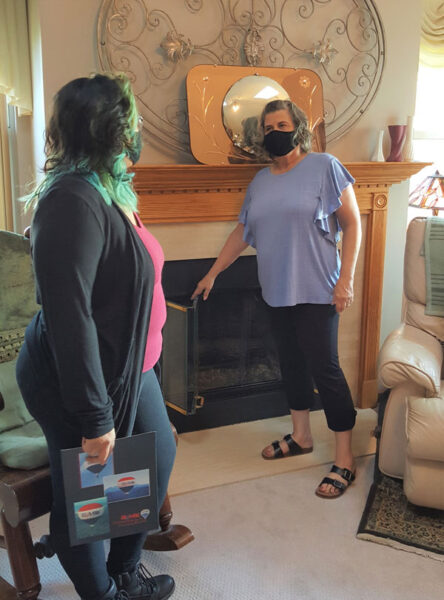
But it also prompted many who had a comfortable suburban home to stay put in a familiar space. So, housing stock during the health crisis was tight, prompting many offers on available homes . . . and even bidding wars.

“Personally, I had my best year ever after 20 years in the business,” said Marilyn Munton, Broker/REALTOR with RE/MAX Suburban. “I usually sell more on the buyer’s side and during the pandemic, my primary buyers were first time home buyers and Baby Boomers who were downsizing. I had a number of clients who were fearful of losing their jobs, so they wanted to move while they could still qualify for a mortgage.”

Jim Regan, another REALTOR with RE/MAX Suburban, is generally a seller’s agent, getting homeowners to list and sell their homes.

“The seller profile really didn’t change much in 2020 except for the fact that there were a lot fewer sellers who were willing to put their homes on the market during the pandemic,” he explained. “I would say there were a great number of sellers who were worried about getting Covid-19 and wanted no part of having strangers come through their home, whether that was a prospective buyer or a realtor discussing putting their house on the market.”

“I believe that has been one of the key reasons why we have had such low inventory,” Regan continued. “It was a lot easier to sell a vacant house during the pandemic than it was one that was occupied by a young or even older family. Until people feel totally safe, I think we’re going to be in a very low inventory situation.”

“I think the pandemic motivated people to stay put. Prospective sellers were fearful of making any major changes and felt extremely nervous about making that kind of decision. In my opinion, many people simply put off the decision to sell, waiting until they feel comfortable about life returning to normal, whatever that may look like.”
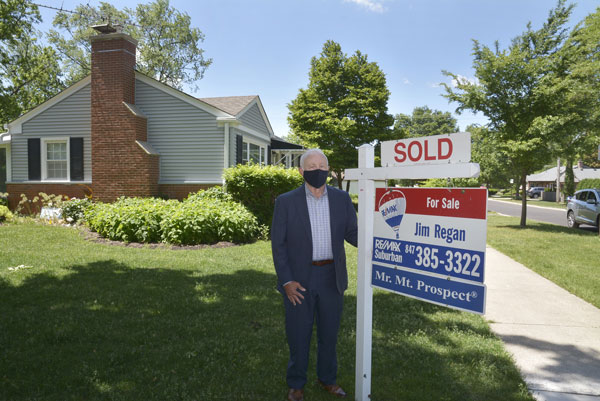
The housing inventory shortage and the number of buyers interested in moving into larger residences and getting a low interest rate prompted numerous bidding wars during 2020 and early 2021.

“Buyers have been frustrated by the experience,” said Munton. “They have been writing offers for properties, over and over again, and still not buying a home.  I represented one buyer who had the seller ask if he could rent back the home from them for a period of time because they had bought so quickly and then the seller kept writing offers and not getting any of the homes.”

“There have been more bidding wars than in years previous, primarily due to low inventory and increased buyer demand due to low interest rates and just simply more buyers in the prime demographic for house buying age which is 25 to 35 years of age,” Regan said. “I have had three or four multiple offer situations on listings of mine. The most that I experienced was eight offers on a property that sold for $15,000 higher than the asking price.”

“Some sellers accepted an offer that was not the highest because it was from buyers who they felt more simpatico with because they had written a nice personal letter and submitted it with the offer,” he continued. “Not all the offers were cash offers. It was a mix of cash and financed offers, and some offers that were accepted were contingent upon a house closing, but none where the contingency was based upon the sale of a house.”

“In addition, none of my sellers had to move to temporary housing because their house had sold. The sellers that I represented had already found a new property first and knew where they were going. Buying first was the only way to be successful in getting a property in this kind of market where you’re competing against other buyers that don’t have a property to sell. Generally speaking, it’s been great to be a seller in this market and hell to be a buyer,” Regan stated.

But even though it was difficult to find a home, buyers were rather choosey. Munton said that shenoticed a trend away from fixer-uppers.  Most buyers don’t really want to do any work anymore, she explained.  That has seemed true for the last three to five years and it wasn’t changed by the pandemic.
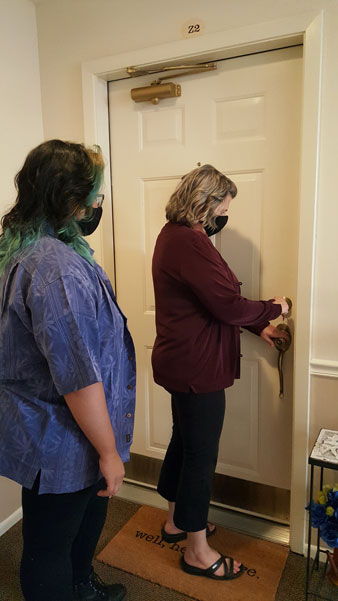
In addition, Regan noted that the number of condominiums and townhomes that closed during the pandemic was about the same as it was in 2019 and this was also true of single-family homes. So, the pandemic did not seem to affect the desirability of one type of property over the other. 

Younger buyers selected single-family homes over townhomes and condos for all the reasons that they have in the past — wanting to have a home of their own versus living in more of a communal setting. Then, older buyers who were tired of owning a single-family house chose to move to a townhome or condominium to eliminate maintenance and reduce taxes.

Munton agreed. “Baby Boomers are downsizing because they want less to take care of.  In addition, the cost to downsize from one single family home to another single-family home have become a bit prohibitive. I have also had a few single women as buyers and they haven’t wanted to worry about maintenance, so they like attached living options.”

During 2020, Regan said that he closed 25 house sales which was actually five more than in 2019 and the average sale price was approximately $293,000 per transaction versus 2019 when his average sale was $376,225. 

“I can’t explain that, but my sales volume in 2019 was $7,524,500 and in 2020 it was $7,308,448. In the last 10 years I have fluctuated between approximately 25 homes sold on the low side to as many as 45 on the high side in a very good, active, year.

Here are some other interesting highlights from Mount Prospect’s real estate market profile in 2019, 2020 and in the first five months of 2021:

“If we were to compare the first five months of the year for all three of those years, we would find that the number of new listings in 2019 was 520, in 2020 it was 369 and in 2021 it was 314. This is for Mount Prospect single-family homes, although condominiums and such are following along trend-wise.” Regan stated. 

“So, this market in 2021 is being driven by very low inventory, historically-low interest rates and increased buyer demand from first time buyers and those buyers seeking to get more space than they have in their current home, especially during a pandemic when many people are working from home and need that additional private space to conduct business free from the distractions of life at home,” he added.

“Overall, from 2019 to 2020 there was a decrease of 30% in inventory in the first five months of the year and in 2021 there was another decrease of 15% for new listings. The reason that I only mention the first five months is because it really sets up what happens in the real estate market in Mount Prospect and elsewhere for the rest of the year,” Regan explained. “If there is very low inventory during those key months of the year, it’s going to be more of a sellers’ market. And with an overall decline of somewhere around 45% of available inventory, it is easy to see why properties are selling quickly, for more money and in many cases, with multiple offers and prices over “asking.” 

Also, at this time in 2021, on average, homes are selling for less than 1 percent below list price whereas in 2019 and 2020 it was 3% less than list price. In addition, the average selling time has gone from approximately 85 days to approximately 35 days.

“Speaking personally,” Regan added, “I can remember the beginning of 2020 and thinking that it would be a really good year for the real estate market and for me, personally. But as more and more information came to the fore regarding COVID-19, it became very unsettling. On March 12 when everything was shut down, I wondered how I could possibly make a living under these circumstances, as well as just get through the day.”

“Although real estate was declared a “essential” service, I was very hesitant to meet with people — both buyers and sellers,” he continued. “But I masked up, wore gloves, had hand sanitizer and muddled along like everybody else, wondering what was going to happen from day to day.”

“Needless to say, when my wife and I finally got vaccinated with our second shot on March 20, it made a tremendous difference and gave us a sense of relief. Most of all, it was wonderful getting back to hugging family members and getting together in person without masks since everybody was getting vaccinated,” Regan concluded.
Filed Under: Personal Accounts

June 8, 2021

VFW Post 1337 and American Legion Post 525 Persevere through the Covid-19 Epidemic

By Ray Limbach 
VFW Post 1337 Historian 
and
Bill Starr
Commander, American Legion Post 525

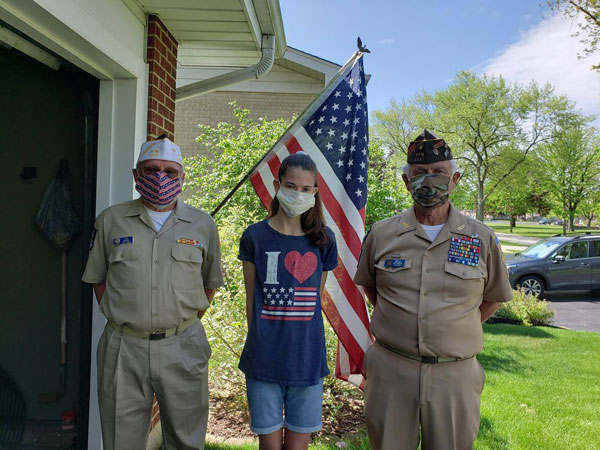
When the virus hit, little was known. When it came out that the most vulnerable were the older adults, and the number of people dying in retirement and elderly care environments, Mount Prospect’s veterans groups had to take precautions. For instance, many members were scheduled for an Honor Flight to Washington D.C., which was cancelled. Many other events were cancelled, as well, as the veterans took all the precautions that were advised.

Most began a self-quarantine program beginning in March. Getting masks and cleaning wipes (not to mention tissue and toilet paper) was next to impossible. We began to video contact our loved ones. We only went out when necessary and learned to keep distance between individuals. All stores that were open required masks and social distancing, with well-placed markers on where to stand and how to travel between aisles. 

With all the uncertainties that each of our members went through, the leadership of both VFW Post 1337 and American Legion Post 525 continued to move forward. Virtual meetings via Zoom were set up to inform and advise on the current situation. Many members met virtually, by computer or over the phone. 

May is always a busy time for both posts. Poppy Day for both posts (May 14th) was held via two separate GoFundMe sites. Members also solicited donations at the Mount Prospect Farmer’s Market several weeks during the summer and the public was very generous. So, the Poppy coffers were replenished. 

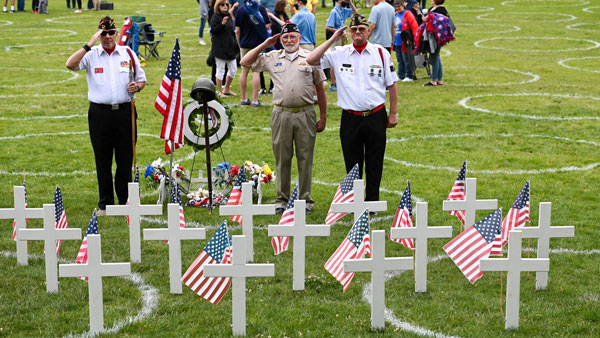
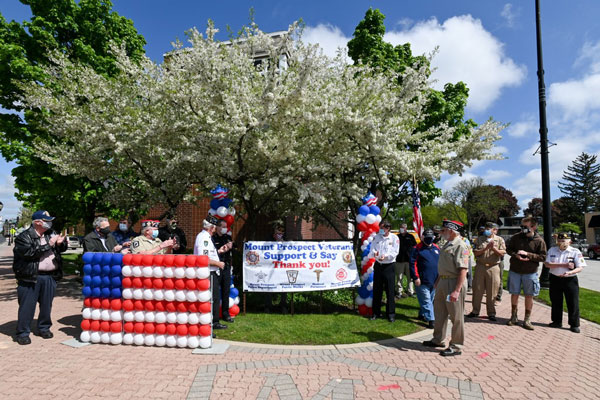
Grave Decoration Day was held in May, as usual. Members of both posts met to decorate approximately 300 graves at 20 separate cemeteries. The Posts also honored all the service workers who were actively protecting them during the COVID crisis with a banner in front of the downtown police and fire station. Masks were worn and all safety precautions were observed. 

The Memorial Day parade and ceremony of May 2020 was cancelled, but some members quietly met at the Veteran Memorial without members of the public to honor fallen comrades. 

For members of the public, a video was made of previous parades and posted online. In addition, Legion Commander Starr, who annually serves as the Master of Ceremonies for Memorial Day, filmed a short message which was broadcast via the Mt. Prospect Park District website, along with Memorial Day thoughts from VFW member and American Legionnaire Kyle Brooks who had been scheduled to speak at the 2020 ceremony. 

The traditional “What Memorial Day means to me” essay contest was hosted by the VFW, despite COVID. Other years the winner had ridden in a convertible and be invited to read his/her entry at the Memorial Day ceremony itself. Instead, the 2020 winner Stephanie Bennet’s winning paper was posted on the VFW website. 

Per usual, the American Legion gave awards to Junior High School students at six different graduations – virtually. The awards included boy/girl Citizenship, Academic and All School Medallions along with an official Certificate of Appreciation to all deserving students at all schools as normal but, of course, virtually. 

The VFW also gave out Patriots Pen awards to grade school students, “Voice of Democracy” awards to high school students and other honors to first responders (fireman and police), one Eagle Scout and two teachers who progressed through the process to be made State VFW Teacher Award recipients. 

Both groups were also quite active with charitable events during the COVID year. For instance, both VFW and American Legion members chose to help fund the acquisition of flat screens for the LaSalle Veterans Home so that residents there could also keep in contact with their loved ones during the COVID crisis. 

The American Legion was unable to continue its tradition of hosting a monthly BINGO game at the Lovell VA Hospital in Lake County, so instead they voted to send $300 per month to the veterans so they could purchase items like snacks from the canteen. 

The American Legion did manage to hold their traditional golf outing at the Mt. Prospect Golf Course which exclusively benefits TLS Veterans of Crystal Lake. TLS is a nonprofit exclusively devoted to supporting homeless veterans. It would have been easy to cancel this event as the virus was still running high but bravely and in the open air, 72 golfers attended the event and were given a unique face mask for the day. No meal was served in the clubhouse, however. Thanks to the event, the TLS Veterans group was presented with a check for $7,752.56. 

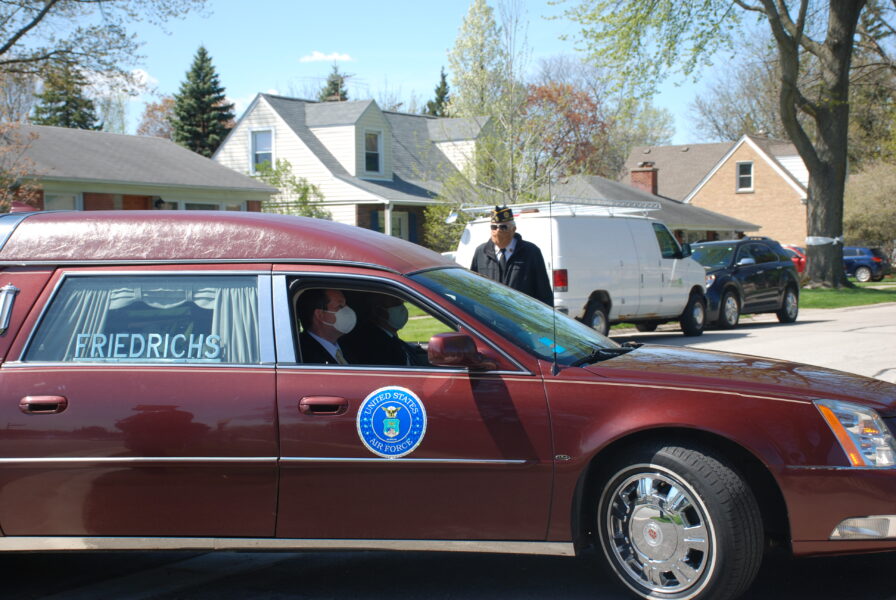
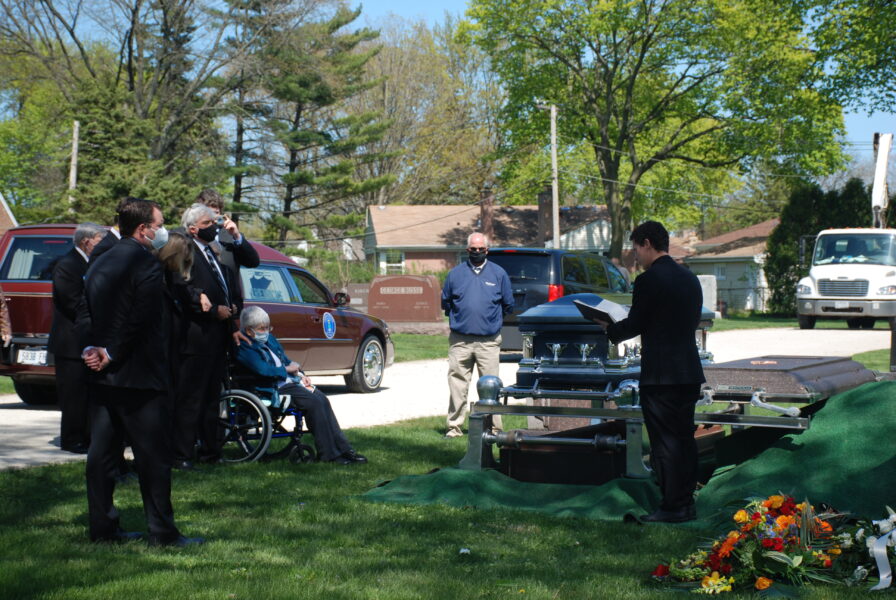
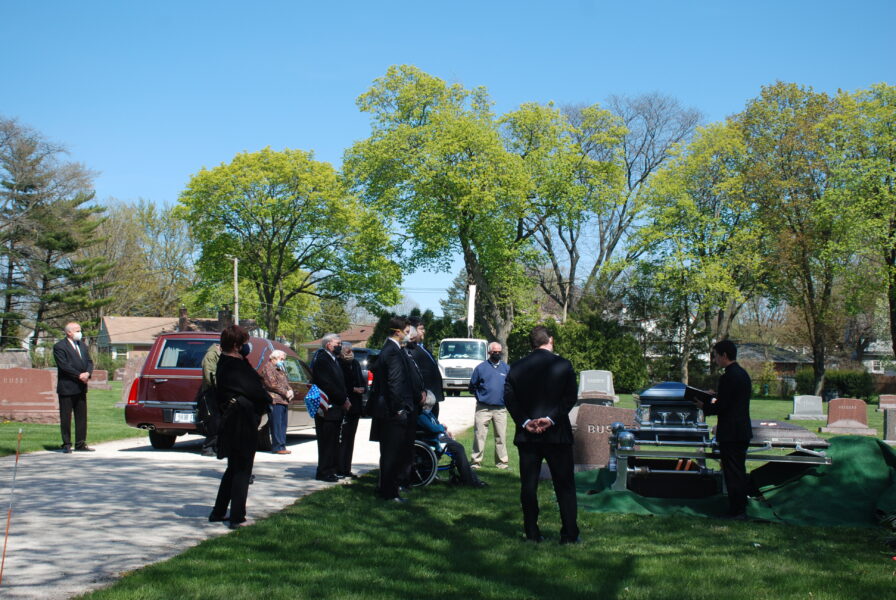
The Legion and VFW also continued to hold “Wake Ceremonies” for deceased members, but we had to make adjustments. We could not, of course, meet at the funeral home as we normally would, but instead provided a very well received (by the families) presence at the cemetery where up to 20 uniformed veterans from both the American Legion and VFW lined the roadway (properly distanced and masked) to come to attention, salute, play TAPS and pay final respect to our comrade as the hearse paused on the way to the gravesite. we attended approximately eight of these ceremonies during the COVID pandemic. 

In November Veterans Day was marked with a unique ceremony at Village Hall which was televised with the help of the Mount Prospect TV personnel.

The virtual ceremony contained the same ingredients as it had in years past, but it was necessary to pre-record parts of the ceremony which could not be done in person due to the pandemic. Those that were pre-recorded were the 21-gun salute, The National Anthem music, keynote speaker address, TAPS played by Prospect High band member and greetings and songs from schoolchildren. Live portions of the program included: beginning and ending prayers, patriotic songs played and sung live, and the reciting of the Pledge of Allegiance. All segments – both live and recorded — were expertly melded together for the ceremony by Steve Martini and Howard Kleinstein of MPTV. It is estimated that thousands of students watched the ceremony live or viewed it via YouTube later that day. 

The local VFW and American Legion Post leadership had also been planning to host an inaugural Thanksgiving meal for sailors from the Great Lakes Training Center, but that did not happen in 2020, due to the pandemic. 

Early in 2021 both the VFW and the American Legion moved their meetings from the Arlington Heights Post 208 to the VFW’s original home at the Mount Prospect Moose Lodge 660 on Main Street. The VFW constructed it with volunteer labor and had met there from 1950 until 1983 when they could no longer afford to maintain it and sold it to Moose Lodge 660.

During the pandemic, VFW representatives met with Moose Lodge representatives and worked out an agreement for the Post to once again hold their meetings back at their former home.  American Legion Post 525 did the same.

In early 2021, many members were able to get their Pfizer COVID shots at Hines VA Hospital. Service officer Dutch DeGroot sent out the information as soon as it was available. Nevertheless, their meetings still practiced social distancing and masks. 

We also began planning for 2021 events like the annual Mount Prospect Veterans picnic in August; an outing up to Milwaukee for a Cubs game; their annual Christmas Dinner; and an inaugural effort to host Naval training boots for a Thanksgiving Turkey Dinner. We hope our Honor Flight will eventually take place as well. Time will tell. We are also looking to resume our various state and national conventions.  

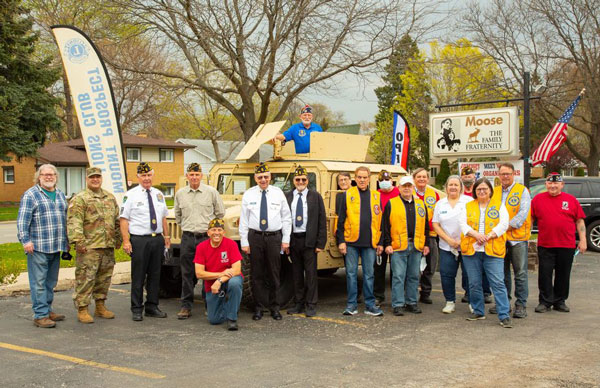
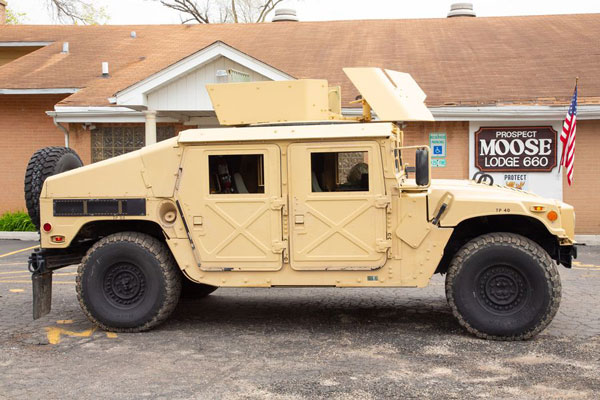
As the Covid crisis eases, we are and must be still on our guard. In April 2021, we held an open house with the Lions, Moose and American Legion and VFW Posts. It was attended by many in the community with their children (they loved the balloons). A member of both Posts, VFW Post 1337 Junior Vice Commander Tony Cuellar even brought down an armored vehicle and all were interested.

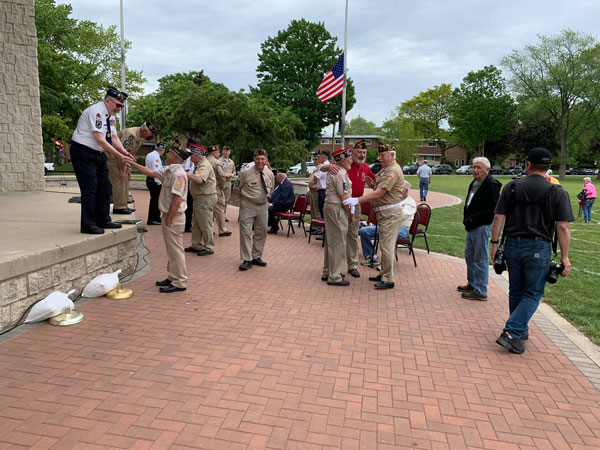
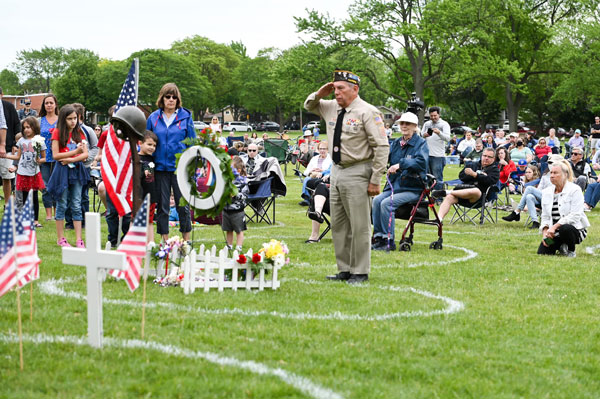
For Memorial Day 2021 the usual ceremony was held – but without the parade. The Park District painted white circles in the grass to assist the 1200-strong crowd maintain social distancing. The Mt. Prospect Community Band could not attend, as they normally would have, so they were very ably replaced by a lovely soloist, Debbie Schreiner, from Saint Paul Lutheran Church who led the crowd in singing “God Bless America,” “America the Beautiful,” and the “Star Spangled Banner.” Major Paul Knudtson, an Illinois Veteran, gave a moving speech. After the ceremony, a luncheon was held at the Moose Hall for members of both organizations.

VFW Post 1337 and American Legion Post 525 are known for being some of the most active veterans organizations in the area – no matter the challenges — because Mount Prospect veterans are proud of their community.  Incidentally, it bears noting that John “Dutch” DeGroot was nominated for VFW Member of the Year in 2021 and Les Durov will become the VFW State Safety Director as of July 1, 2021.

Filed Under: Personal Accounts

May 31, 2021

Saying Farewell to Those We Lost during COVID

Friedrichs Funeral Home has been a part of the Mount Prospect community since 1958 and during the COVID-19 pandemic of 2020-21, it was run by Hank Friedrichs Jr., grandson of the founder.

Unlike businesses that simply had to figure out how to continue to ply their trades during a tragic time with repeated lock-downs, funeral homes had to figure out how to do business while also physically dealing with people’s loved ones who had died of a myriad of diseases and causes, including the scary and new COVID-19 virus. 

Over a 14-month span, Friedrichs handled arrangements for 35 COVID victims, as well as many more who died of other medical conditions, accidents, old age and so forth.

“Like every business, COVID affected us tremendously overnight,” Friedrichs recalled. “In the beginning, nobody knew how COVID was really transmitted and how long the virus could live in the air. We were picking up folks who had passed away from COVID – which was a concern. We were using safety precautions, but also, there were folks who had passed away from the COVID who had probably exposed family members to COVID and we were, in some cases, having contact with those family members.  So, we were very concerned about exposure to COVID,” Friedrichs recalled.

And in the early days, he admitted that they – like everybody else – got caught flatfooted and only had about ten full PPE sets of equipment on hand. “And that was not going to be nearly enough to get us through the COVID time. Our suppliers – the people we buy our funeral industry supplies from – really came through on the PPE for us. They kept us supplied with PPE throughout the COVID times and we were very thankful for that.”

“One of the things we did here, because of that concern, was to cut our staff back. We continued to keep the part-time staff who do all the clerical and cleaning and that type of stuff on the payroll, but we told them to stay home. I’ve got two funeral directors and two hearse drivers and I made two teams of two and they would work every other day.  I did that so that the chance of an entire staff coming down with COVID was limited because they were not around each other. I do have to say that the teams of two did the work of a team of about five people. My staff really came through for us.”

Another major change Friedrichs Funeral Home had to make involved technology.  “When somebody passes away, the family comes into the funeral home and we make arrangements.  That is how it has been done for years,” he explained. “But when COVID hit, families didn’t want to come into the funeral home and, quite honestly, we weren’t sure we wanted families coming into the funeral home. So, we had to learn how to make that initial arrangement session using technology and between Facetime and Zoom calls, we were able to do that.”

They also had to figure out how to let people choose caskets, vaults and printed materials from their homes.  So, the technology of just the arrangement session was a big change, right from the beginning, he explained. 

Figuring out how to livestream funerals so that people could watch from home was the next hurdle. 

“We’re not IT people here but we had to start livestreaming – and reliably livestreaming – services.  When I say reliably, you don’t want to tell a family that you have that technology (and they have 30 or 40 people sitting in their homes) and suddenly it’s not coming up and they can’t see the funeral service.  So, there was a lot of pressure on us to get a reliable livestreaming service going.” 

The types of funeral services offered also had to change – literally over night!

“A majority of the services that we have here at Friedrichs are what we call “traditional funerals”. This involves a one-night visitation (usually from 3 until 9) and then a funeral service or funeral Mass the next day and off to the cemetery.  Immediately that stopped.”

During the pandemic they, of course, followed the CDC and state guidelines and limited services to ten people. 

“So, a lot of folks – right at the beginning – were just meeting at a cemetery. Others that did want to have more of a traditional type of funeral, meaning a viewing, held a one-hour viewing in the morning, for ten people – and then it was off to the cemetery. And that is how, for the first several months of the COVID, we were doing funerals.  You couldn’t have more than ten people, so people didn’t want to come here and sit for six hours in the afternoon, so they came for one hour in the morning,” Friedrichs explained.

“During this time, it was quite heartbreaking because we had to tell people that they could only have ten people in the funeral home for their loved one’s funeral,” he continued. “Oftentimes, that doesn’t cover the immediate family. We had one family with eight kids.  They couldn’t even bring their spouses, much less the grandchildren or brothers and sisters, to the funeral.   For us, that was hard.”

“No families ever fought us on that because we were all in this together, but when you want to offer compassion in a final sendoff for somebody’s loved one, you want to be able to do your best and by only allowing ten people, we felt like we weren’t doing that.”

Friedrichs said that as time went on, the state requirements changed, and they were able to increase the number of people in the funeral home to 50.  

“This was nice. It still didn’t really open up and allow for a traditional funeral, but it did allow more people to come in. The advantage we have here at Friedrichs is we have two chapels and the wall between them can come down and it can become one very large chapel. So, throughout the entire COVID time, whether there were ten people or 50 people permitted, we were always able to have plenty of room for people to “social distance” in the funeral home.”

“Even today, toward the end of the COVID era, we still don’t see a lot of traditional funerals coming back,” he continued.  “We have more, but we still see a lot of the one-hour (in the morning) wakes and services and I don’t know if ‘traditional funerals’ will ever again be a majority of the services we do. That is yet to be seen.”

“But making arrangements by computer has already gone away. People are more willing to come into the funeral home now.”

Livestreaming of funerals, on the other hand, is here to stay. 

Looking back, Friedrichs said that limiting the number of people who could come to a funeral was hard for them to deal with. They were never really overrun with COVID deaths.  The number of funerals they did during COVID was a little bit higher than the previous year or two, but those fluctuations happen in their industry. 

Actually, Friedrichs said that the death rate during COVID kind of mirrored what they normally see in the fall and winter when the first flu virus goes through nursing homes.  COVID was much more deadly and much more contagious, he admitted, but the death rate mirrored what they normally see during different times of the year and they were never really overrun with COVID deaths. 

“I think that the one thing I will personally remember is that it was almost hopeless for everybody at the beginning of COVID. There was really no light at the end of the tunnel.  It was a sad time. I’ve never lived through something like that,” he recalled.

“I lived through 9/11 and that was a horrible tragedy. But within days after 9/11, while things changed all over the world, things were starting to get back to normal here,” he continued. “With COVID, we went for over a year with things not being normal and just as human beings, we’re not built to be able to deal with that.  It was very hard on me, personally. and I’m not saying anything that I’m sure anybody else out there who has lived through the last year and a couple months would say differently.”

In the late spring of 2021, he added, Friedrichs Funeral Home was notified by their national association that FEMA had come up with a plan to give up to a $9,000 reimbursement to families whose loved ones had died of COVID. So, the Friedrichs staff went back through their records and notified every family that had a loved one who died of COVID that they were eligible for that money and relayed what they needed to do to access it.

Filed Under: Personal Accounts

  • « Go to Previous Page
  • Page 1
  • Interim pages omitted …
  • Page 5
  • Page 6
  • Page 7
  • Page 8
  • Page 9
  • Interim pages omitted …
  • Page 14
  • Go to Next Page »

Primary Sidebar

Recent Posts

  • Holiday Housewalk 2025
  • Cleopatra to Visit MPHS
  • Holiday Family Fun in December

Community Links

  • Journal and Topics Media Group
  • Mount Prospect Public Library
  • The Daily Herald
  • Village of Mount Prospect

Forms

  • Pandemic 2020 Release Form

Resources

  • Central School
  • MP Lost and Found
  • On-Line Activities
  • On-Line Resources

Social Networks

  • Facebook MPHS
  • Twitter

Footer

Please follow & like us :)

Facebook

Mount Prospect Historical Society
101 South Maple Street
Mount Prospect, IL 60056
847.392.9006
info@mtphistory.org

The Mount Prospect Historical Society is a 501(c)(3) nonprofit organization that is committed to preserving the history of Mount Prospect, IL, through artifacts, photographs and both oral and written memories of current and former residents and businesspeople.  On its campus in the heart of the Village, the Society maintains the 1906 Dietrich Friedrichs house museum, the ADA-accessible Dolores Haugh Education Center and the 1896 one-room Central School, which was moved to the museum campus in 2008, renovated and opened to the public in 2017, the 100-year anniversary of the Village.

Archives

Copyright © 2026. ALL RIGHTS RESERVED · Mount Prospect Historical Society Log in