• Skip to primary navigation
  • Skip to main content
  • Skip to primary sidebar
  • Skip to footer

Mount Prospect Historical Society

#wrap

  • About Us
    • Our Museum
    • History
    • Virtual House Tour
    • Hometown History Video Series
    • Vanished Mount Prospect
    • Guided Tours of Dietrich Friedrichs Historic House Museum
    • Presentations
    • Dollhouse Tours
  • Shop
  • Volunteer
  • Donations/Membership
    • Donate
    • Donate an Artifact
    • Giving Tuesday
    • Membership
  • Events
    • Holiday Housewalk 2025
    • Saturday Afternoon Teas
    • Bessie’s Workbasket
    • Evening Creations
    • MPHS Book Club
    • Youth Programs
    • Cemetery Walk at St. Paul Lutheran Cemetery
  • Newsletters
  • Central School
    • For Educators
    • Donors
  • Research Resources
    • Pandemic Moments 2020-21
      • COVID-19 Survey 2021
      • Contributing to Pandemic Moments
      • Personal Accounts
      • Youthful Insights
      • Contact Release Form web format
      • Contact Release Form in PDF format
      • Pandemic Reflections
    • Mount Prospect Businesses
    • Churches of Mount Prospect
    • Essays on Mount Prospect’s History
    • Houses of Mount Prospect
    • Lost and Found Mount Prospect
    • Mount Prospect People
    • Schools of Mount Prospect
    • Mount Prospect Stories
    • Structural Memorials
    • Other Sources for Research
    • Centennial 2017
    • Neighborhood Walking Tours
  • Subscribe!

newsletter

March 9, 2021

From the Desk of the Director March 2021

Emily Dattilo, Executive Director

Hello and happy Spring, readers! One of the many lessons 2020 taught us was the importance of flexibility. Like so many cultural institutions around the world, we have been adapting to a new normal. I’m grateful that we have a talented and committed team of staff, board members, and volunteers who have made the transition to virtual programming smoother than imagined.

We met some of the past year’s challenges by adapting the format of some of our programs. Some programs were easily modified to follow new safety guidelines, like the blacksmith demonstrations, but others were moved online. Instead of hosting summer History Camp programs at the historical society campus, last summer’s campers met online to participate in activities themed around the history of the Olympics and the Chicago World’s Fair. The complications of the pandemic also inspired us to create new programs, like the 2020 Dollhouse Video Tour.

Because so many guidelines have, so far, remained the same in 2021, we are continuing to be creative in finding ways to share history with the Mount Prospect community. Our Annual Meeting, for example, will be a virtual presentation this year. Watch your email inboxes, as well as our website and social media, for more details on this event. The financial presentation of the Annual Meeting is enclosed in this newsletter. This spring our Second Sunday programs will not feature “Make and Takes,” but rather “Take and Makes.” Participants will take their activity supply bags home and make the craft together over Zoom, instead of in Central School.

Although our buildings are not yet open to the public, you can still reach us by calling the office or sending an email to info@mtphistory.org. We regularly share moments from Mount Prospect history on our Facebook, Instagram, and Twitter accounts. Make sure to follow us if you’re not already! Our social media accounts and our website are two of the best places to stay up-to-date on all our upcoming events.

Stay safe and healthy
Emily Dattilo, Director
Filed Under: newsletter

March 9, 2021

If Walls Could Talk: The Russel Farmhouse and its Residents

by Emily Dattilo

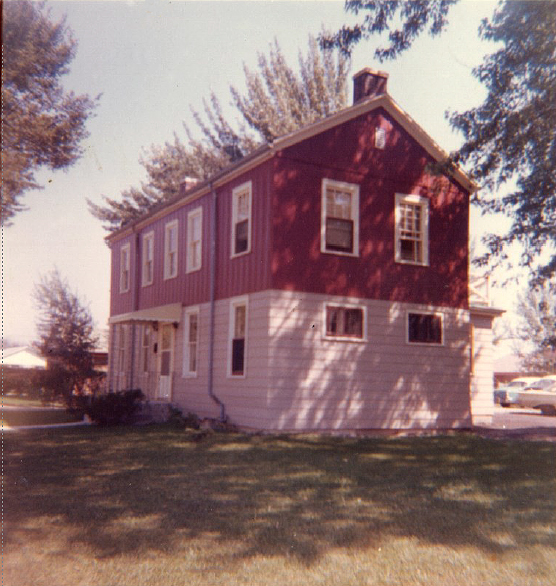
Russel Farmhouse, c. 1964

Does this house look familiar? You may have seen it while driving down West Kensington Road before May 2001, or you may have taken a virtual tour through its miniature counterpart on the 2020 Dollhouse Video Tours. Though this house at 211 W. Kensington Road no longer stands, its distinctive red and white siding make it memorable. However, few remember the Russel family who lived there and farmed the
surrounding land. The only indication that the Russels were ever there is the street named after them, which intersects Kensington Road near the farmhouse. Despite their relative obscurity in 2021, the Russel family left their mark on the community. Their lives and the life of their house and farm offer a snapshot of the development of Mount Prospect from a small farming community to a busy suburb.

It’s unclear when the farmhouse at 211 W. Kensington Road was constructed, but it was connected to the Russel family. Hans Heinrich Russel, also known as John Henry Russel, arrived in the United States from Germany in 1849. He was one of many German immigrants who fled economic and political hardships in the Germanic states during the 1840s. Hans made his way to the present-day northwest suburbs, and there he married Engel Maria Schilling of Schaumburg. They had a son, Henry. Engel Maria died in childbirth, and a few years later Hans married Louisa Katz of Elk Grove. Louisa gave birth to another son, John. She was probably related to the Mount Prospect Katz family who owned much of the land north of Central Road, including the surroundings of the red and white farmhouse. Even with this close connection it’s not known how Hans acquired the farmland neighboring the Katz family. His 1904 Cook County Herald obituary suggests that he began farming that land around the time of his marriages in the 1850s. In 1878 Hans also constructed a house on the 200 block of Russel Street. Almost 50 years later Ludwig or Henry Katz split that house in two and moved the other half across the street.

Despite the geographical distance between neighboring farms, farm families maintained close ties with their community. They helped with each other’s farm work, especially at harvest time, and they came together to socialize and celebrate. Hans must have been a good neighbor to be remembered in his obituary as “one of our substantial German citizens, an early settler who by industry and honesty rose to affluence and influence, highly esteemed by all who knew him.” By the 1900s the family and their farm were so well-known in Mount Prospect that the Russel farm was noted as a landmark when the Cook County Herald announced the beginning of Mount Prospect’s rural mail delivery service.

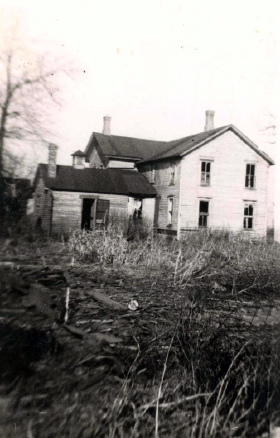
Russel Farmhouse, c. 1940s

While Hans and his oldest son, Henry, were actively involved in the farm community, John’s career path headed in another direction. As the long-time secretary of the Des Plaines Mutual Insurance Company he insured the goods and farms of families all across the area. He also served as the school treasurer of Wheeling Township and became an elder and trustee in
St. Peter’s Lutheran Church in Arlington Heights.

Russel family members began moving off the farm and into Arlington Heights in the early 1900s. Henry rented the farm and sold the equipment at auction in October 1911 and the Russel farm went up for sale after his passing in 1918. A public notice in the Cook County Herald announced the public auction of the farm on September 21, 1918. The records do not clearly note who purchased the estate, but the H. Roy Berry Company discussed developing Northwest Heights, which includes the Russel Estate, in a January 1926 issue of the Cook County Herald. They boasted of turning the farm into “small country estates” that are “especially suited to the man who has a desire to raise his own vegetables and live the life of a small farmer while being employed in the city.” This series of events for the Russel farm was mirrored elsewhere in Mount Prospect, especially during the 1920s development boom. For example, William and George Busse purchased the rest of the Owen Rooney farm in 1916 and over the following years subdivided the land into Busse’s Eastern Addition. These sales laid the groundwork for Mount Prospect’s transformationfrom a small farming community into a growing suburb.

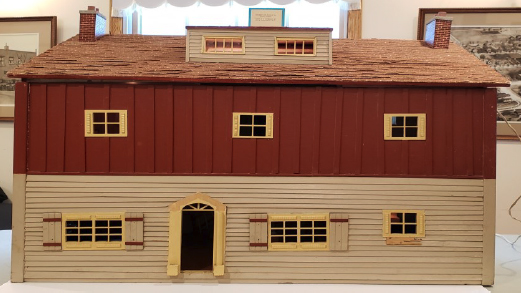
Marge Atwood’s Dollhouse

In 1942 Margie Atwood and her family moved into the Russel farmhouse. The Great Depression halted much of the redevelopment of the 1920s, so the
rest of the neighborhood, like much of Mount Prospect, was still surrounded by farm fields. Prospect High School and Randhurst Shopping Center, two present-day landmarks in the area, hadn’t been built yet. The Atwoods were at the edge of town.

The Russel farmhouse appears run-down in a photo from the 1940s (and for this reason was included in the book Lost Mount Prospect), so it may have been impacted by the Great Depression’s slowdown. Fortunately, the Atwoods brought the Russel farmhouse back to life around the same time that development resumed in the rest of the neighborhood. By the 1964 photo (page 1) the house appears well-cared for. In this way the Russel farmhouse successfully transitioned to its role as one of many homes in a suburban neighborhood, a feat not guaranteed for most historic farmhouses.

The Russel farmhouse stood facing Kensington Road until it was destroyed by fire in May 2001. A new house with a new design was constructed in its place. However, the story of this house doesn’t end here. Margie Atwood was so charmed with the farmhouse after living there for almost 40 years that she decided to build a dollhouse replica. This project fulfilled her lifelong dream of having her own dollhouse, according to a 1982 Daily Herald article. She renamed the house Atwood Manor.

This dollhouse not only represents a long-time resident’s labor of love, but it also serves as the only remaining physical link to the neighborhood’s agricultural past. Through this dollhouse the Russel family continues to have a place in the Mount Prospect community.


Thank you to Jean Murphy for research assistance!


Note: The spelling of “Russel” appears most frequently with one L.

Filed Under: newsletter

November 4, 2020

Pandemic 2020 Moments

Who will tell Mount Prospect’s story of the Pandemic? The Mount Prospect Historical Society (MPHS) in partnership with the Village of Mount Prospect Community Engagement Committee and the Mount Prospect Public Library have begun a project to collect our residents’ memories and stories of this time in history. Residents and others associated with Mount Prospect are encouraged to submit essays, photos, videos, poems, oral history or other items through the MPHS website. Much is being recorded by national news sources and others; however, we want to create a legacy for future residents to know how Mount Prospect residents specifically lived during this challenging time. Please consider contributing to this important archive.

Neighborhood Walking Tours

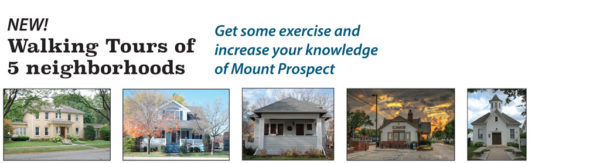
The Mount Prospect Historical Society introduced five downloadable neighborhood walking tours this year to entertain those who are increasingly walking and bicycling through town. Get some exercise and learn more about Mount Prospect! And wear a newly designed inspirational MPHS t-shirt to show your pride in Mount Prospect. Download the tours and buy a t-shirt on our website.

Filed Under: newsletter

  • « Go to Previous Page
  • Page 1
  • Interim pages omitted …
  • Page 3
  • Page 4
  • Page 5
  • Page 6
  • Page 7
  • Go to Next Page »

Primary Sidebar

Recent Posts

  • Holiday Housewalk 2025
  • Cleopatra to Visit MPHS
  • Holiday Family Fun in December

Community Links

  • Journal and Topics Media Group
  • Mount Prospect Public Library
  • The Daily Herald
  • Village of Mount Prospect

Forms

  • Pandemic 2020 Release Form

Resources

  • Central School
  • MP Lost and Found
  • On-Line Activities
  • On-Line Resources

Social Networks

  • Facebook MPHS
  • Twitter

Footer

Please follow & like us :)

Facebook

Mount Prospect Historical Society
101 South Maple Street
Mount Prospect, IL 60056
847.392.9006
info@mtphistory.org

The Mount Prospect Historical Society is a 501(c)(3) nonprofit organization that is committed to preserving the history of Mount Prospect, IL, through artifacts, photographs and both oral and written memories of current and former residents and businesspeople.  On its campus in the heart of the Village, the Society maintains the 1906 Dietrich Friedrichs house museum, the ADA-accessible Dolores Haugh Education Center and the 1896 one-room Central School, which was moved to the museum campus in 2008, renovated and opened to the public in 2017, the 100-year anniversary of the Village.

Archives

Copyright © 2025. ALL RIGHTS RESERVED · Mount Prospect Historical Society Log in