• Skip to primary navigation
  • Skip to main content
  • Skip to primary sidebar
  • Skip to footer

Mount Prospect Historical Society

#wrap

  • About Us
    • Our Museum
    • History
    • Virtual House Tour
    • Hometown History Video Series
    • Vanished Mount Prospect
    • Guided Tours of Dietrich Friedrichs Historic House Museum
    • Presentations
    • Dollhouse Tours
  • Shop
  • Volunteer
  • Donations/Membership
    • Donate
    • Donate an Artifact
    • Giving Tuesday
    • Membership
  • Events
    • Holiday Housewalk 2025
    • Saturday Afternoon Teas
    • Bessie’s Workbasket
    • Evening Creations
    • MPHS Book Club
    • Youth Programs
    • Cemetery Walk at St. Paul Lutheran Cemetery
  • Newsletters
  • Central School
    • For Educators
    • Donors
  • Research Resources
    • Pandemic Moments 2020-21
      • COVID-19 Survey 2021
      • Contributing to Pandemic Moments
      • Personal Accounts
      • Youthful Insights
      • Contact Release Form web format
      • Contact Release Form in PDF format
      • Pandemic Reflections
    • Mount Prospect Businesses
    • Churches of Mount Prospect
    • Essays on Mount Prospect’s History
    • Houses of Mount Prospect
    • Lost and Found Mount Prospect
    • Mount Prospect People
    • Schools of Mount Prospect
    • Mount Prospect Stories
    • Structural Memorials
    • Other Sources for Research
    • Centennial 2017
    • Neighborhood Walking Tours
  • Subscribe!

HS Board

July 31, 2021

Pandemic Reflections of Mount Prospect’s Mayor Arlene A. Juracek (2013-2021)

By Arlene A. Juracek

I knew that a chapter in a future, yet to be written, history book about Mount Prospect would include my tenure as mayor during our Centennial Year of 2017. Little did I know that it could also include the impacts of the Covid-19 pandemic on the community and its leaders in 2020-21. Coming a century after the infamous “Spanish Flu” pandemic of 1918-1920, the experience was challenging on so many levels: personal, as an elected community leader for its residents and businesses, and as the top of the organization chart for our village manager, department heads, employees and their handling of resource allocations.

On a personal level, as a scientist/engineer, I understood a lot of the statistical and epidemiological information that was being broadcast on a daily basis. As someone who lived through the early 1950’s and 60’s immunization efforts in the United States I personally witnessed the eradication of serious diseases like smallpox and polio, and am glad that my own children and grandchildren needn’t suffer through measles and mumps like I did. With Covid-19, we were dealing with a novel virus of unknown proportions and individual and community-wide impacts, and a medical and supply chain delivery system that was ill-prepared to predict and execute a treatment and prevention plan. As the crisis first presented itself, early advice and prognostications for Illinoisans were geared as much towards preserving critically important PPE and ventilator resources for the most severely ill, while seeking to stop the virus in its tracks through eliminating opportunities for crowds to congregate. Thus, a lot of confusion was generated by early mask guidance that evolved over time as supply chains caught up and as the means of this specific viral transmission became better understood. As an engineer, it made sense that hypotheses be revised as data were able to be analyzed. This isn’t flip-flopping. This is learning. But for many folks, the evolving story was confusing and that confusion, unfortunately, became mired in political spin.

As a retired person living on social security and a pension, I was economically okay. As an introvert, the solitude of self-isolation didn’t bother me. And as someone with a small, albeit multi-generational family I was able to keep my “bubble” contained as we all pitched in to make remote working and child care doable. While considered higher risk because of my age, I am fortunate that I am relatively healthy. As far as this virus is concerned, I was in a relatively privileged position to deal with it.

As a community leader, however, I was in a position to see how business and school shutdowns wreaked havoc on personal and business economies, to see the broad differences among our families and businesses in their ability to cope, to recognize how confusing the evolving advice from county, state and national health authorities is to non-technical people and how political, generational and familial experiences influenced thinking and anxiety levels. Furthermore, print and broadcast news sound bites were often masking the nuances of the advice being given.

Wanting to be a fully informed community leader, I felt an obligation to tune in to the daily televised gubernatorial briefings, the City of Chicago and Cook County briefings, and the private briefings for mayors with these entities specifically arranged by our regional councils of government. As the days, weeks and months wore on I realized how all-consuming these had become for me, both in terms of time and emotional commitment. I became hostage to the daily schedule of briefings. I eventually had to take a forced break just to maintain some “normalcy” and stress relief. But I am grateful for the communications outreach by these entities, because I felt better equipped with statistics, information and rationale as I attempted to address the spectrum of concerns presented by our residents and businesses.

I know that some people in the community feel that the Governor’s phased mitigation plan and executive orders erred on the side of being overly cautious. And that caution spilled over into rules promulgated by Chicago and Cook County. In fact, I concurred with the concerns of the restaurant and hospitality sector that some of those rules painted too broad a stroke, for example lumping restaurants and bars into the same category. I was glad that my leadership and participation at the state and county levels resulted in my being asked to participate in a mayors’ task force charged with informing the governor’s staff on ways to revise the mitigation plan to better restore business operations without compromising public health. We were successful in those efforts as we progressed through Stage 4 to get to Stage 5.

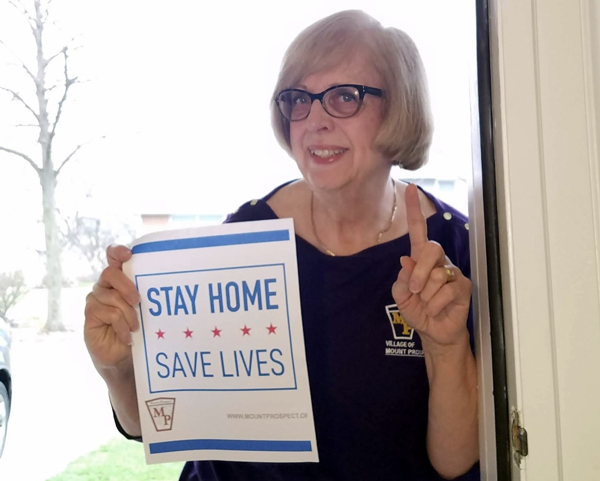
Additionally, I took steps to ensure that our restauranteurs and liquor license holders were granted relief consistent with the emergency guidance issued by the Illinois Department of Public Health and the Illinois Liquor Commission. Some of these changes proved so successful that I hope we can make permanent changes to our liquor ordinances to accommodate new business models and customer expectations. Our Building and Inspection Services team was kept very busy working with our businesses to maximize carryout and outdoor dining opportunities and respond to resident concerns about enforcement of mask and social distancing rules. Social media certainly served to keep us all informed of business and resident anxieties and concerns, but highlighted the need to communicate facts in multiple and easily digestible ways. A complaint in a string of Facebook comments is not nearly as effective as direct communication with the mayor, village manager or a village trustee. But by monitoring the conversations, we could begin to proactively address many issues. I created an informative public service video on various types of masks, and posted a meme of me admonishing folks to “Stay Home and Save Lives” building on the popularity of those featuring Chicago’s mayor. These were pushed out on social media and the village’s dedicated Covid-19 web portal.

I received many expressions of concern early in the pandemic “stay-at-home” period that there was too much congregating in parks and neighborhoods of adults and children, and of suspected violations of the indoor dining ban. Some expected our police department to ticket perceived offenders. With no legal authority to ticket or arrest, I have high praise for our officers who did their best to patrol all areas of the village and offer reminders and advice when the need arose. Our health department also investigated every reported instance of restaurant rule violations. Our village manager convened regular meetings with park, library and school leadership to ensure the concerns we were hearing at the village level were being conveyed to parties responsible for the places people were congregating. This is just one example of the actions taken by our village manager, department heads and staff of which I am extremely proud. These included many hours spent by our police and environmental health staff investigating complaints and working with the community to ensure safe and healthy conditions. When birthday parties were replaced with drive by parades, our public safety officers were happy participants in those events.

As I mentioned above, early in the pandemic response the nation was gripped by personal protective equipment (PPE) supply shortages, and I am extremely grateful for the teamwork among the municipalities and health care providers in the northwest suburbs to ensure our first responders had access to sufficient PPE to do their jobs safely. Northwest Central Dispatch, our hospitals and fellow municipal leaders met regularly to ensure resources were being fairly allocated.

During my final State of the Village Address on April 20, 2021 I offered the following recap of our Covid-19 impacts on our revenues and on our services, and our response:

Little did we know that Covid-19 would throw village revenues for a loop during 2020. We first estimated a $5.6 million revenue shortfall. As 2020 progressed, that was lowered as some revenue streams actually outperformed initial estimates! In addition, we initially projected a Covid-19 residual impact of $1.2 million for 2021. Fortunately, the village developed a risk mitigation strategy that has served us well. This flexible plan provided us with direction for making budget adjustments as necessary, while still prioritizing key life safety and core customer service initiatives. The 5-step plan, which began implementation in April, was designed to reduce expenditures by up to $7 million as conditions warranted.

What was the plan?

  • Capital projects worth $3.4 million were postponed to 2021 and beyond.
  • Computer and vehicle replacement fund lease payments were suspended in 2020. Vehicle replacement fund payments have since been resumed.
  • Various village-sponsored events were cancelled, and the village observed a self-imposed hiring freeze.
  • All training and travel was postponed except for mandatory Police and Fire training.

Additional steps in the plan would have required a review of programs and services provided by the village and a review of staffing levels. Fortunately, we were able to retain a high level of service while living within our means. This proved to be invaluable during the stressful times experienced by our residents and businesses.

As we reported last week, when all was said and done, while a number of line item revenue streams fell short by $5.4 million dollars, remarkably others outperformed by $31,000 more than the loss. So on total, revenues held their own.

We also took proactive steps to cushion the blow to our residents and businesses.

  • We extended due dates for water/sewer bills and vehicle stickers multiple times.
  • We waived 50 percent of the liquor license fees for restaurants, and extended existing liquor licenses for 6 months without charge. We relaxed alcohol carry-out rules in accordance with State Liquor Commission guidance to facilitate restaurant cash flow and meet resident demand.
  • We reallocated some existing budget amounts and used part of the Cook County allocation of Cares Act relief to fund $600,000 in grants to 60 restaurants, who each received $10,000 in December 2020.
  • We helped restaurants to implement outdoor dining and provided strategic marketing support.
  • Our Covid-19 web page portal is constantly updated with information about federal, state, county and local assistance programs, which we actively promote via several channels such as the Chamber and social media.
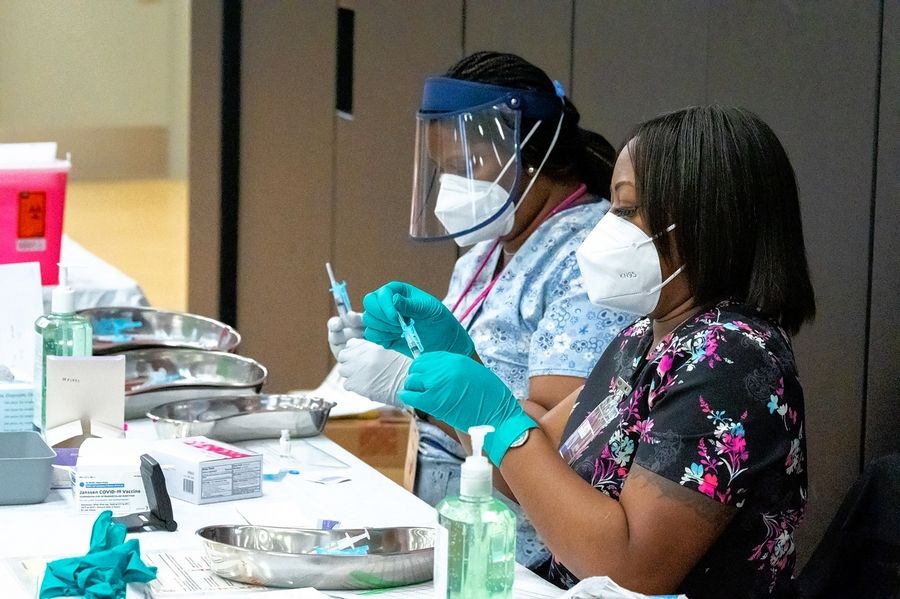
  • Our Human Services Department has done amazing work as ad hoc vaccine hunters, contacting hundreds of our senior citizens who made previous contact with the village, to assist with securing vaccine appointments. They have also been recognized by the Chicago Metropolitan Agency for Planning as models of how to connect our residents with state funding for emergency rent and food pantry assistance.
  • The village partnered with Jewel-Osco and other communities for a vaccination event at the Schaumburg Convention Center and is seeking other partnerships, especially for those who are home bound and unable to travel.

Going forward, most of the deferred capital projects are budgeted and funded as part of the 2021 CIP. And over the next year we will receive about $6 million in federal Covid relief. While we are awaiting federal guidance, Staff is preparing a plan to share with the finance commission and village board to best use these funds. This is on top of staff’s excellent track record across all our departments in securing federal, state and local grants to fund our important infrastructure and service needs.

I could not be prouder of our Village Staff, who under village manager Mike Cassady’s leadership performed as a cohesive and responsible team to best serve our residents and businesses. While our village board met via teleconference when necessary, it was a cumbersome process to ensure public participation. We did our best. Our public works and digital communications departments did creative work to ensure we could safely meet remotely and in person as circumstances allowed. They did such a good job providing unobtrusive Plexiglas shielding between board members on the dais for our in person meetings that it appeared to some residents we were flaunting the rules! So the stresses of normal business were compounded by Covid-related stress and misunderstandings. Our village board proved itself to be resilient under the circumstances and thoughtful and responsive in meeting the community’s needs.

As I write this, our nation and locality are not out of the woods when it comes to Covid-19. While vaccination rates are high among the population eligible to receive it, the emergence of the Delta variance and social dynamics between the vaccinated and unvaccinated are driving a resurgence of cases. It is likely we’ll be in this state of flux for some time. But I believe Mount Prospect has shown itself capable of dealing with this crisis and will continue to do so. I am honored to have been mayor during this unique period of our history.

Filed Under: Personal Accounts

July 21, 2021

Fall Bulb Fundraiser 2021

The Mount Prospect Historical Society is once again offering fall flower bulbs for sale. The bulbs are guaranteed to bloom or you get a free replacement. Bulbs ranging from daffodils, lilies, tulips and beyond, can be ordered completely online. Your purchase will be automatically credited to the Society. Each order will be shipped directly to the purchaser, no matter where they are in the country. Consider suggesting to friends that they purchase their bulbs on behalf of the Mount Prospect Historical Society this year, too.

To purchase bulbs, click here.

Call the Society at (847) 392-9006 or email info@mtphistory.org with any questions.

Filed Under: Events

July 15, 2021

Trinity Methodist Church Community Remains Close-Knit by Using ZOOM

By Neal Bradley

As Governor Pritzker was issuing statewide closures and quarantining for live group events in March of 2020, we were weighing our options. Would we survive without live, in-person worship? How could we continue to reach out to our members who were in need, spiritually as well as physically and financially? We didn’t panic. We knew that God would give us a solution.

Most of us at Trinity United Methodist Church in Mount Prospect had never even heard of the online meeting application called “ZOOM.” We were investigating Facebook Live, YouTube and a myriad of other platforms that might work. Under the direction of our pastor, Rev. Wendy Hardin Hermann, we formed a small group of church members and staff and investigated the options.

We then discovered that one of our congregants used Zoom every day in business and was very versed in its functionality. From that point, we moved forward. It was a huge learning curve for most of us but we took it one step at a time. We purchased a Zoom account to accommodate large groups and let everyone know that we would have regular worship on Sunday via Zoom and Facebook Live and also embedded on our website. We then had a few seminars to get everyone in our congregation up and running. It took off from there. A big thank you to our A/V team for doing an incredible job each and every week, not to mention our office administrator Lise Renee, Zoom hosts, greeters, attendance keepers, facilitators, music committee, “ReTurn” committee, and worship committee. It truly has been a community effort.

We were one of the first churches in the area to have live worship on Sunday morning. We felt it was important for all of us to stay in contact with each other one way or another, and Zoom was our platform. We decided to have a before-worship “meet and greet” at 10:10 am, a one-hour service followed by a virtual “coffee hour” so that everyone who wanted to, could socialize and keep in contact with fellow members.

We continued to use Zoom for most church activities including Sunday School, Wednesday Evening Prayer, staff meetings, UMW meetings, choir meetings, bible study, committee meetings, several community groups including B.R.E.A.T.H.E., book club and youth meetings. We even started a “lunch bunch” for those who wanted to connect during the week at noon for lunch. One of our members, Jerry Hug, a well-known photographer, hosted an online iPhone photography course. All proceeds were generously donated by Jerry to community outreach.

One of our favorite Christmas time events has always been our Christmas Pageant. In 2020 church members Lorelei Junkel, Carolyn Schneider and Carmen Talbott led the Christmas pageant movie production team. The movie was streamed via Zoom during our Sunday Service. We also offered Christmas caroling via Zoom. The choir sang on several Sundays via prerecorded individual submissions merged into one movie by one of our choir members, Doug Nafis. We sang the Hallelujah Chorus on Christmas Eve using that same method.

We used our website for volunteer sign up sheets, questionnaires, monetary donations, registration for worship forms, prayer requests, getting to know you forms, event registrations, etc. We also fine-tuned our communications to members by sending out the weekly Tidings newsletter, as well as notifications for special events and prayers, through the mailchimp e-blast platform.

We also had to be innovative for other special events. At Christmas time we organized an outside drive-through “Cookie Walk” sponsored by United Methodist Women, a “Drop Off & Give Back” event which included a Baby Jesus Diaper drop-off and a Pop-up Nativity scene.

During Lent we sponsored several neighborhood prayer walks through the “Love Your Neighbor” campaign organized by our Community Ministries Director Jacki Bogolia. One weekend a group walked over to pray at Robert Frost School, which we continue to support through Trinity’s Food4Kids gift cards program. The Trinity community donated almost $5,000 in gift cards for food insecure families last year.

In the spring of 2021 we held several children’s events including our annual Easter Egg Event and a celebration of Earth Day on the church grounds. Early summer we also hosted an Ice Cream Social and a Pride Month celebration outside in the front of the church along Golf Road.

As Illinois has slowly opened up, we have continued to follow recommended guidelines and practices. As of June 2021, we are again at full capacity. We will, however, continue streaming our services every Sunday via Facebook Live so that members who are housebound and other former members from around the country can still tune in.

It truly has been a wild ride for the past year and a half. But with much prayer and God’s guidance, we made it through.

Filed Under: Personal Accounts

  • « Go to Previous Page
  • Page 1
  • Interim pages omitted …
  • Page 11
  • Page 12
  • Page 13
  • Page 14
  • Page 15
  • Interim pages omitted …
  • Page 131
  • Go to Next Page »

Primary Sidebar

Recent Posts

  • Holiday Housewalk 2025
  • Cleopatra to Visit MPHS
  • Holiday Family Fun in December

Community Links

  • Journal and Topics Media Group
  • Mount Prospect Public Library
  • The Daily Herald
  • Village of Mount Prospect

Forms

  • Pandemic 2020 Release Form

Resources

  • Central School
  • MP Lost and Found
  • On-Line Activities
  • On-Line Resources

Social Networks

  • Facebook MPHS
  • Twitter

Footer

Please follow & like us :)

Facebook

Mount Prospect Historical Society
101 South Maple Street
Mount Prospect, IL 60056
847.392.9006
info@mtphistory.org

The Mount Prospect Historical Society is a 501(c)(3) nonprofit organization that is committed to preserving the history of Mount Prospect, IL, through artifacts, photographs and both oral and written memories of current and former residents and businesspeople.  On its campus in the heart of the Village, the Society maintains the 1906 Dietrich Friedrichs house museum, the ADA-accessible Dolores Haugh Education Center and the 1896 one-room Central School, which was moved to the museum campus in 2008, renovated and opened to the public in 2017, the 100-year anniversary of the Village.

Archives

Copyright © 2025. ALL RIGHTS RESERVED · Mount Prospect Historical Society Log in